

All-on-4 Dental Implants – Full Arch Teeth Replacement: A fixed solution for Missing or failing teeth.
All-on-4 Dental Implants – Full Arch Teeth Replacement can restore your smile with full-arch dental implants. Missing teeth, loose dentures or multiple failing teeth can affect more than your smile. They can make eating uncomfortable, change the way you speak and leave you feeling less confident in everyday situations.
All-on-4 dental implants offer a treatment option for eligible patients who need to replace most or all of the teeth in an upper or lower jaw. By supporting a full arch of replacement teeth on four strategically positioned dental implants, this approach can provide a stable alternative to traditional removable dentures.
At Sunny Coast Dental, we take the time to understand your concerns, assess your oral health and explain the available options so you can make an informed decision about your smile.
Interested in All-on-4 Dental Implants – Full Arch Teeth Replacements? Contact our team to arrange a free 20 minute consultation and find out whether All-on-4 treatment may be suitable for you.
Book a Consultation 07 5443 1263
What are All-on-4 dental implants?
All-on-4 Dental Implants – Full Arch Teeth Replacement is a full-arch tooth replacement technique that uses four dental implants to support a fixed bridge of replacement teeth. The implants are placed in the jawbone, where they provide support for the new teeth as the treatment progresses.
Unlike traditional dentures, which rest on the gums and can move during eating or speaking, a fixed All-on-4 bridge is secured to the implants and is not designed to be removed by the patient.
The technique uses a combination of implant positions to support the replacement teeth. In suitable cases, the placement of the implants may help make use of the available bone and reduce the need for additional bone grafting. However, this depends on your individual anatomy and treatment plan.
All-on-4 Dental Implants – Full Arch Teeth Replacement may be considered for people who have lost most or all of their teeth, have multiple teeth that cannot be predictably restored, or struggle with conventional dentures.
Every patient is different, so a clinical examination and appropriate imaging are needed to determine whether this treatment is suitable.
Watch this useful Youtube video below
How does All-on-4 treatment work?
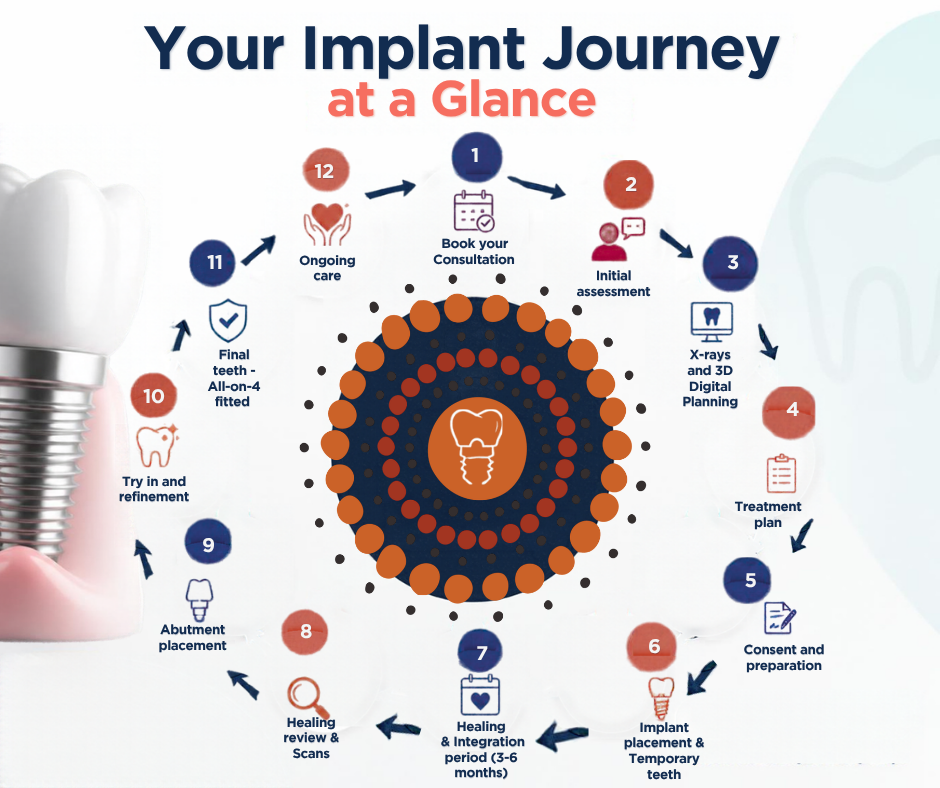
All-on-4 Dental Implants – Full Arch Teeth Replacement involves several stages, from your initial consultation through to the placement and maintenance of your new teeth.
1. Consultation and treatment planning
Your dentist will assess your teeth, gums, jawbone and general oral health. This may involve dental X-rays, a 3D scan and an evaluation of your bite.
Your dentist will discuss your goals, explain the potential benefits and limitations of full-arch dental implants, and determine whether All-on-4 or an alternative treatment may be appropriate.
2. Implant placement
The dental implants are surgically placed into the jawbone under an appropriate anaesthetic plan. Any remaining teeth that need to be removed may be extracted as part of the treatment.
The procedure is planned around your anatomy, oral health and the final design of your replacement teeth.
3. Temporary replacement teeth
Some patients may be suitable for a temporary fixed bridge shortly after implant placement. This is sometimes described as “teeth in a day”.
However, immediate fixed teeth are not appropriate for every patient. Implant stability, bone quality, bite forces and other clinical factors influence whether this approach is possible.
In other cases, a different temporary restoration or healing period may be recommended.
4. Healing and final teeth
The implants need time to integrate with the surrounding bone, a process known as osseointegration. Once healing and clinical checks are satisfactory, your dentist can arrange your definitive replacement bridge.
Your final teeth are designed with consideration for function, appearance, bite and ease of cleaning.
What are the benefits of All-on-4?
For appropriately selected patients, All-on-4 dental implants may offer several advantages.
- Fixed replacement teeth: The bridge is secured to dental implants rather than resting freely on the gums.
- Improved stability: Fixed implant-supported teeth can provide greater stability than conventional removable dentures.
- Restored chewing function: A well-planned restoration may help you eat a broader range of foods, subject to your dentist’s advice.
- A natural-looking smile: The replacement teeth are designed to complement your facial features and smile.
- Full-arch tooth replacement: One treatment plan can replace most or all teeth in an upper or lower jaw.
- Potentially fewer implants: Four implants may support a full arch in suitable cases, although some patients need a different implant configuration.
The results depend on factors such as bone health, implant integration, the restoration design, oral hygiene and ongoing professional care. No implant treatment can guarantee a particular outcome.
Who is suitable for All-on-4 dental implants?
All-on-4 Dental Implants – Full Arch Teeth Replacement may be an option for adults who have lost most or all of their teeth, have multiple failing teeth or are looking for an alternative to removable dentures.
You may be considered for treatment if you:
- Have several missing teeth or are facing full-arch tooth replacement.
- Have loose or uncomfortable conventional dentures.
- Have teeth that are severely damaged or cannot be predictably restored.
- Want to explore fixed replacement teeth rather than removable dentures.
- Have sufficient bone and suitable oral health for implant placement, or can be treated safely with an appropriate additional plan.
Factors such as active gum disease, smoking, certain medical conditions, medications and uncontrolled diabetes can affect implant treatment and healing. These do not necessarily rule out treatment, but they need to be assessed carefully.
A consultation is the best way to understand your options and whether All-on-4 is appropriate for your circumstances.
How much do All-on-4 dental implants cost?
The cost of All-on-4 dental implants varies depending on your clinical needs, the materials used and the complexity of your treatment.
Factors that may influence the total cost include:
- Whether one or both jaws need treatment.
- Whether teeth need to be extracted.
- The need for additional procedures, such as bone grafting.
- The type and materials of the temporary and final bridges.
- The complexity of your bite and implant placement.
- The imaging, laboratory work and follow-up care required.
When comparing All-on-4 prices, it is important to understand exactly what each treatment plan includes. A quoted fee may cover different components depending on the provider.
At Sunny Coast Dental, we can explain the proposed treatment, associated fees and available payment options following an assessment. Sunny Coast Dental offers interest free payment plan through Denticare
Want to understand the cost of full-mouth dental implants? Contact our team to discuss an assessment and an individualised treatment plan.
All-on-4 vs traditional dentures
Traditional dentures and All-on-4 dental implants both replace missing teeth, but they work differently.
Traditional dentures are removable appliances that rest on the gums. They may be suitable for patients who prefer a non-surgical option, but some people experience movement, discomfort or difficulty eating certain foods.
All-on-4 uses dental implants to support a fixed bridge. This can offer greater stability, but it involves surgery, a longer treatment process and a higher initial financial commitment.
The right option depends on your oral health, preferences, budget and willingness to undergo surgery.
All-on-4 vs implant-retained dentures
Although the terms are sometimes used interchangeably, All-on-4 and implant-retained dentures do not always refer to the same type of restoration.
All-on-4 commonly describes a fixed full-arch bridge supported by four implants. The bridge is generally removed only by a dental professional for maintenance when necessary.
Implant-retained dentures often refer to removable dentures that attach to implants using special connectors. These dentures can provide better retention than conventional dentures while still allowing the patient to remove them for cleaning.
The main differences are removability, maintenance, the design of the restoration and the way it is supported.
Your dentist can explain which option best suits your needs and whether other approaches, such as an implant-supported removable denture or a different fixed implant bridge, should be considered.
Is All-on-4 painful?
Dental implant surgery is performed with an appropriate anaesthetic plan to manage discomfort during the procedure. Sedation may be available for selected patients, depending on the clinic and their needs.
After surgery, it is normal to experience some swelling, bruising, tenderness or discomfort. These symptoms vary between patients and usually improve during recovery.
Your dentist will provide instructions on pain management, oral hygiene, diet and follow-up appointments. Contact your treating team if you experience severe or worsening pain, persistent bleeding, fever or other unexpected symptoms.
How long does recovery take?
Recovery after All-on-4 surgery varies depending on the complexity of treatment, your health and how well the implants heal.
Initial swelling and discomfort generally improve over the first several days, but the implants require a longer period to integrate with the jawbone. Your dentist will advise when it is appropriate to progress your diet and when the final bridge can be fitted.
Even if you receive temporary fixed teeth soon after surgery, this does not mean the implants have fully healed. You may need to follow a modified diet and avoid excessive pressure on the new teeth during healing.
Follow your dentist’s instructions closely to help protect the implants and restoration.
How do you care for All-on-4 dental implants?
Good oral hygiene and regular professional maintenance are essential for the long-term health of dental implants.
Your care routine may include:
- Cleaning around and beneath the bridge with tools recommended by your dental team.
- Using an appropriate toothbrush and interdental cleaning aids.
- Attending regular dental reviews and professional cleaning appointments.
- Following instructions for any removable temporary or final components.
- Avoiding smoking and addressing factors that may increase the risk of implant complications.
- Reporting pain, looseness, bleeding or changes in the way your teeth fit together.
Although the implants themselves cannot develop tooth decay, the surrounding gums and bone can still be affected by inflammation and infection. The bridge may also require maintenance or replacement over time.
How long do All-on-4 dental implants last?
Dental implants can function for many years, but their longevity varies from person to person. Factors include your health, bone and gum condition, oral hygiene, smoking, bite forces and attendance at maintenance appointments.
The implants and the bridge they support are different components, and they may have different maintenance or replacement needs. A bridge can wear, chip or require repair even when the implants remain stable.
Your dentist will explain the expected maintenance requirements and how to care for your restoration over time.
https://jada.ada.org/article/S0002-8177(14)62041-9/abstract
Is All-on-4 right for you?
If you are living with missing teeth, uncomfortable dentures or multiple failing teeth, full-arch dental implants may be worth exploring.
All-on-4 is one of several treatment options available. The best approach depends on your oral health, jawbone, expectations, budget and long-term maintenance needs.
At Sunny Coast Dental, our team can assess your situation, answer your questions and help you compare suitable treatment options.
Take the next step towards a more confident smile.
Contact Sunny Coast Dental to arrange a consultation and learn more about All-on-4 dental implants.
Frequently asked questions about All-on-4
Can you get All-on-4 if you have no teeth?
Yes, people who have lost all the teeth in an upper or lower jaw may be candidates for All-on-4. Suitability depends on bone availability, oral health and other clinical factors.
Can you get All-on-4 in one day?
Some suitable patients can receive a temporary fixed bridge on the day of implant surgery or soon afterwards. This is not guaranteed, and the definitive bridge is generally fitted after the required healing and assessment.
Is All-on-4 better than individual dental implants?
Neither option is automatically better. All-on-4 is designed to replace a full arch of teeth with a fixed bridge supported by a small number of implants. Individual implants may be more appropriate when replacing selected teeth. Your dentist can compare the benefits, limitations and costs of each approach.
Can I replace my dentures with All-on-4?
Potentially. Many patients who wear removable dentures explore fixed implant-supported teeth. Your dentist will assess your bone, gums, medical history and preferences before recommending a treatment plan.
What is the difference between All-on-4 and All-on-X?
All-on-4 generally refers to a full-arch restoration supported by four implants. All-on-X is a broader term used for full-arch implant treatment with a variable number of implants, depending on the treatment plan. The appropriate number and positioning of implants are determined by clinical assessment rather than the name alone.
Do All-on-4 teeth look natural?
Replacement teeth can be designed to complement your facial features, smile and preferences. The appearance depends on the restoration design, materials, gum contours and individual clinical factors. Your dentist can discuss the expected appearance and limitations before treatment.
Can I eat normally with All-on-4?
Many patients can enjoy a varied diet after treatment and healing, but you may need to follow a softer diet initially. Your dentist will guide you on when and how to return to firmer foods. Some foods may continue to require care depending on your restoration and bite.
Are All-on-4 dental implants permanent?
The implants are intended to provide long-term support, but the treatment is not maintenance-free. The bridge may need repairs, adjustments or replacement, and regular professional care is important to help maintain implant health.
How do I find out if I am suitable for All-on-4?
Book an assessment with one of our qualified dentists. Your dentist can examine your mouth, arrange appropriate imaging and explain whether All-on-4 or another tooth replacement option is most appropriate for you.
Take the first step towards a confident new smile. Book a consultation with our dental team to find out whether All-on-X dental implants are right for you.


